The Journey Needs Direction
Middle school students are in one of the most formative seasons of their lives. Their beliefs, habits, and relational patterns are taking shape rapidly, and the environments around them play a significant role in their development. Research shows that young people desire spiritual guidance but often lack consistent discipleship structures in their church experience. Because of this, middle school ministry cannot rely on spontaneous lessons or occasional gatherings. Students need a discipleship framework that gives their spiritual journey direction and purpose. At Riverside, the heart for students is strong, but the ministry has lacked a cohesive structure that supports long-term formation. Without a framework, students receive encouragement but not always guidance. They hear the truth, but not always in a sequence that helps them understand how the pieces of faith fit together. This gap is exactly what the Christ Integration Camp was created to address.
Why Middle School Ministry Needs a Framework
Middle schoolers benefit from predictable patterns. They feel safer and more confident when they know what to expect and how each part of their experience connects to something larger. Developmental research confirms that early adolescents rely on structure to help them navigate emotional, social, and cognitive transitions.[1] When ministries lack structure, students often feel unsure about what they are learning or how to apply it.
A discipleship framework provides the clarity they need. It gives students a pathway that builds from one week to the next. Instead of receiving disconnected messages, they begin to see how Scripture, relationships, and spiritual practices work together to shape their faith. A framework also helps leaders stay aligned, ensuring that every lesson, conversation, and activity supports the same spiritual goals. This is especially important at Riverside, where students come from diverse backgrounds and levels of biblical understanding. A structured pathway ensures that every student, regardless of where they begin, has a clear route toward spiritual maturity.
The Gap in Riverside’s Current Ministry
Riverside’s middle school ministry has passion, volunteers, and a desire to serve students well. What it lacks is a unified plan. Without a framework, leaders often plan week to week, which makes it difficult to build momentum or reinforce key themes. Students may hear meaningful messages, but without a sequence or strategy, those messages do not always connect in ways that help them grow.
This gap is not a failure. It is simply a sign that the ministry has reached a point where it needs structure to support the next stage of growth. Research from the Fuller Youth Institute shows that young people develop lasting faith when they experience consistent mentoring, relational discipleship, and environments that intentionally guide their spiritual development.[2] Riverside has the heart for this work; what it needs now is the framework.
What a Discipleship Framework Provides
A discipleship framework does more than organize content. It creates a shared direction for leaders, students, and families. It ensures that every part of the ministry works together toward the same goal. For middle schoolers, this means:
- clear expectations about what they will learn
- consistent rhythms that help them feel secure
- developmentally appropriate teaching
- opportunities to practice faith in real ways
- a sense of belonging within a community that grows together
A framework also strengthens leadership. Instead of planning in isolation, leaders can collaborate around a shared vision. This improves communication, increases consistency, and ensures that students receive a unified message about who Christ is and who they are becoming.[3]
How Christ Integration Camp Meets This Need
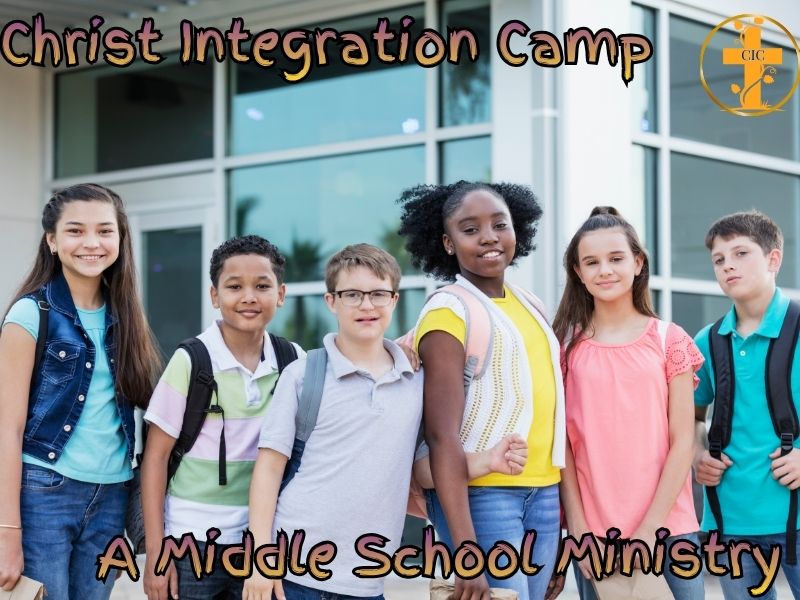
The Christ Integration Camp was created to fill the exact gap Riverside is facing. The CIC offers a yearlong discipleship pathway that builds intentionally from one week to the next. It integrates Scripture, relationships, spiritual practices, and community experiences into a cohesive framework that supports middle schoolers across every aspect of their development. The CIC provides students a place to explore faith with guidance, ask questions without fear, and grow in confidence as they learn what it means to follow Jesus. It provides the stability they need during a season of rapid change and the clarity they need to understand how faith shapes their daily lives. The CIC also equips leaders with tools, rhythms, and shared expectations to disciple students more effectively. Instead of reacting to the needs of the moment, leaders can guide students through a thoughtful, intentional journey that supports long-term spiritual growth.
The Journey Continues
Middle schoolers need more than inspiration. They need direction. They need a pathway that helps them understand who they are in Christ and how to live out their faith with confidence. Riverside has the heart for this work. CIC provides the structure. These early steps give students a foundation they can build on as they grow. They begin to see that discipleship is not a moment but a process that unfolds over time. Each week becomes another opportunity to practice faith in real and meaningful ways. The journey continues in the next post, where we will explore the Ministry Development Plan and how it brings this framework to life in practical and sustainable ways.
[1]. Laurence Steinberg, Adolescence, unabridged ed. (Columbus, OH: McGraw-Hill Education, 2016), 32.
[2]. Brad M. Griffin, Tyler S. Greenway, and Kara E. Powell, “Faith Beyond Youth Group: A Framework for Character-Forming Discipleship in Youth Ministry,” Journal of Youth Ministry (2022): 12, https://www.academia.edu/106337930/Faith_Beyond_Youth_Group_A_Framework_for_Character_Forming_Discipleship_in_Youth_Ministry.
[3]. Kurt Copeland, Balanced Youth Ministry, 7th ed. (n.p.: Independently Published, 2020), 31.
 Christ Integration Camp
Leave a comment